
The 7/12 Utara, also known as the Satbara Utara, is one of the most useful land records for farmers in Gujarat. It contains important information about agricultural land and can help a landowner understand what is recorded in the government land records.
For farmers, checking the 7/12 Utara from time to time is useful because land ownership, cultivation, loans, mutations, and other details can change over the years.
What Is a 7/12 Utara?
The 7/12 utara is a land record that provides information about a particular agricultural land parcel. The name comes from the combination of two traditional revenue record forms, Village Form 7 and Village Form 12.
Village Form 7 mainly contains information related to the land and rights recorded against it, while Village Form 12 contains information related to cultivation and crops.
Together, these details give a useful picture of the land recorded in the revenue records.
What Information Can Be Found in a 7/12 Utara?
Depending on the record and available details, a Gujarat 7/12 document may contain information such as:
- Survey number
- Land area
- Name of the recorded owner
- Details of rights or interests in the land
- Land type or classification
- Cultivation details
- Crop information
- Irrigation related information
- Details of certain changes or mutations
- Other revenue record information
The exact information shown can vary depending on the land record and the version of the record being viewed.
Why Is the 7/12 Utara Important for Farmers?
The 7/12 document is important because it gives farmers access to official revenue record information about their agricultural land.
For example, a farmer may check the record to confirm whether the owner’s name and survey number are recorded correctly. Crop and cultivation information can also help when checking the historical revenue record of the land.
It can be particularly useful when dealing with:
- Land ownership related matters
- Agricultural loans
- Land transactions
- Mutation or inheritance related changes
- Government schemes and agricultural applications
- Checking survey number and land area
- Verifying revenue record information
However, a 7/12 document should not automatically be treated as the only document needed to establish legal ownership. For important property transactions or disputes, farmers should also check the relevant registered documents and obtain appropriate legal or revenue advice.
How to Check Your 7/12 Utara Online
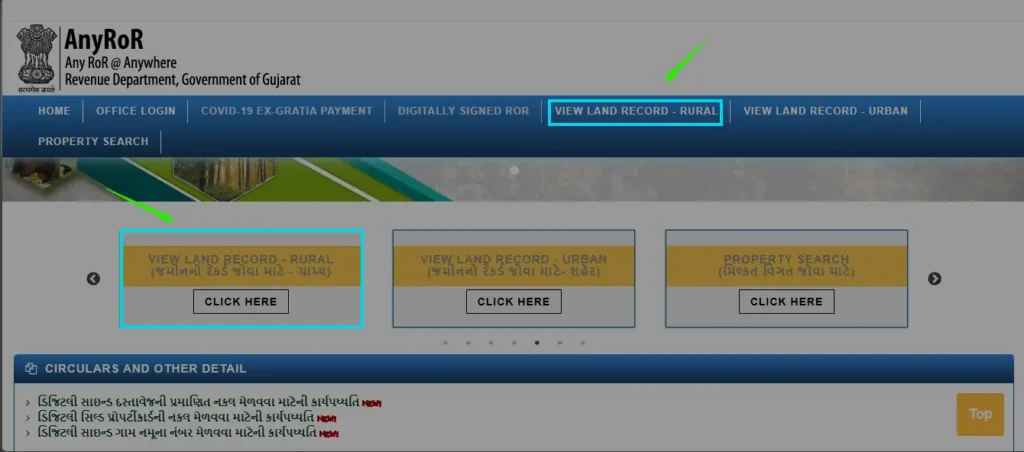
Gujarat farmers no longer need to visit the Talati’s office for a basic check. The record is available through the state’s official AnyRoR portal (anyror.gujarat.gov.in):
Step1:
Go to the Rural Land Record section of the official AnyRoR website.
Step2:
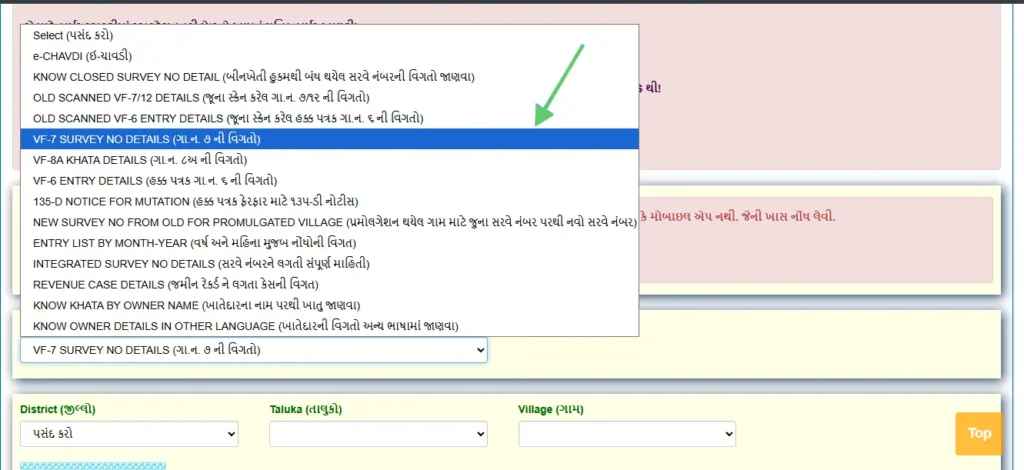
Choose the relevant search option (survey number, VF-7 details, or VF-8A Khata by owner name).
Step3:
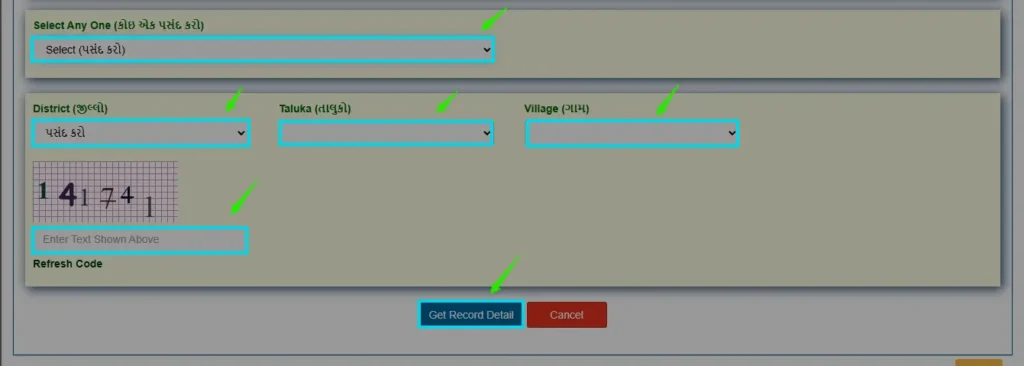
Select your District, Taluka, and Village.
Step4:
Enter the captcha code and click “Get Record Detail.”
This free online view is useful for checking your own details and catching errors early. For legal or bank purposes, you’ll typically need a Digitally Signed RoR, which requires an additional login and verification step through the official iORA portal — the free view alone usually isn’t accepted for formal transactions.
Common Mistakes Farmers Find on Their 7/12
It’s worth reviewing your record periodically rather than only checking it when you urgently need it. Frequent issues include:
- Spelling errors in the owner’s or cultivator’s name, which can cause problems when the name needs to match other ID documents.
- Area discrepancies between the recorded area and the actual measured land, sometimes left over from old survey records.
- Unrecorded mutations — if you inherited or purchased land recently and the ownership change hasn’t been updated yet, the old owner’s name may still appear.
- Outdated crop information, which can matter for insurance or subsidy applications tied to a specific crop season.
Note: If you spot any of these, the correction has to be requested through the concerned Talati or Mamlatdar’s office. It can’t be fixed through the online portal itself, since that’s just a viewing interface for the underlying revenue records.
Conclusion
The 7/12 Utara is an important land record for Gujarat farmers because it provides useful information about agricultural land, ownership records, cultivation, and other revenue details.
Understanding each section makes it easier for a farmer to check whether the information recorded against the land is correct. If there is an error or an important change that has not been reflected, the farmer should verify the relevant documents and contact the appropriate revenue authority for correction.
Note: This article is for general information only and isn’t a substitute for advice from your local Talati, Mamlatdar’s office, or a qualified professional for anything involving a legal or financial decision. For the official and legally valid record, always refer to the Gujarat government’s AnyRoR portal.